The online casino market has become unbelievably crowded.
Every month, new casino brands appear promising:
- bigger bonuses,
- faster withdrawals,
- more games,
- better VIP systems,
- and “the ultimate player experience”.
At first glance, many of them look almost identical.
The same slot providers.
The same live casino studios.
The same promotional language.
Sometimes even the same website structure with different colours slapped on top like a cheap rebrand nobody was supposed to notice.
Yet players still consistently trust some casinos while abandoning others within minutes.
And interestingly, the reasons behind those decisions are often completely different from what casino operators think actually matters.
Because in 2026, players are no longer choosing online casinos purely because of oversized welcome offers or flashy marketing promises.
Modern casino players have become much more selective, more cautious and far more aware of risk than the industry sometimes likes to admit.
Trust Is Assessed Almost Instantly
Casino choice usually starts with one very simple question:
“Does this place actually feel safe?”
Most players do not open ten tabs and perform deep licence research immediately.
They scan.
They look for reassurance signals:
- professional design,
- recognisable payment methods,
- clean mobile experience,
- visible licensing,
- realistic promotions,
- and overall credibility.
If something feels slightly off, trust disappears extremely quickly.
Experienced players especially tend to spot weak operators faster than casinos expect.
And honestly, after years of:
- delayed withdrawals,
- confusing bonus traps,
- fake urgency marketing,
- and questionable offshore platforms,
players have good reasons to be sceptical.
In many cases, a casino is rejected emotionally long before the user consciously explains why.
That first impression matters massively.
Withdrawal Reputation Quietly Became One of the Biggest Decision Factors
A few years ago, bonuses dominated casino marketing.
Today, experienced players increasingly care more about one thing:
withdrawals.
Because every casino looks generous while deposits are flowing in.
The real test starts when money moves in the opposite direction.
Players now actively evaluate casinos based on:
- payout speed,
- withdrawal consistency,
- verification friction,
- and whether the operator develops “sudden complications” after somebody wins.
Fast withdrawals signal:
- stability,
- professionalism,
- operational competence,
- and fairness.
Slow withdrawals create suspicion almost immediately.
Especially in international casino markets where players may already feel uncertain about regulation or dispute protection.
A casino with average bonuses but excellent payout reputation will often outperform a flashy operator constantly creating withdrawal friction.
And the industry knows this very well.
Familiar Payment Methods Create Psychological Comfort
Most players strongly prefer casinos supporting payment methods they already recognise and trust.
That familiarity reduces perceived risk before the first deposit even happens.
A player seeing:
- Skrill,
- Neteller,
- Visa,
- Mastercard,
- crypto wallets,
- or local banking solutions
immediately feels more comfortable than on a site using obscure payment processors nobody has heard of before.
Because payment systems quietly shape trust.
More than many casino operators realise.
Players rarely think:
“This payment infrastructure increases my confidence psychologically.”
But behaviourally, that is exactly what happens.
And in 2026, reducing friction matters enormously.
Games Are Expected – Not Special Anymore
Modern casino players already assume most platforms offer:
- major slot providers,
- live dealer games,
- mobile compatibility,
- and large game libraries.
That is now considered standard.
Which means game selection rarely becomes the primary decision factor unless somebody is specifically hunting for:
- high RTP slots,
- crypto-exclusive games,
- niche live casino experiences,
- or specific providers.
Ironically, having “8,000+ games” no longer sounds impressive to many experienced users.
It simply sounds normal.
Players notice missing functionality much faster than oversized libraries.
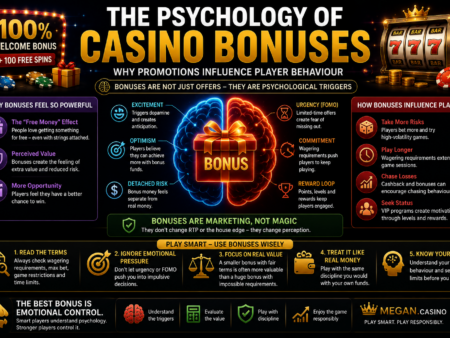
Bonuses Still Attract Attention – But They No Longer Build Trust Alone
Bonuses still work.
Of course they do.
Large welcome offers trigger curiosity and clicks extremely effectively.
But modern casino players have also become far more educated about:
- wagering requirements,
- max cashout clauses,
- bonus restrictions,
- hidden conditions,
- and promotional loopholes.
That changed player psychology significantly.
Today, the actual decision process usually looks more like this:
- trust creates interest,
- payment confidence reduces fear,
- usability creates comfort,
- and bonuses simply push the final click.
Not the other way around.
Casinos relying purely on oversized promotions often struggle badly with long-term retention because players eventually judge platforms based on experience, not banners.
Interface Quality Quietly Influences Everything
Players now expect casino platforms to feel:
- fast,
- smooth,
- intuitive,
- and mobile-friendly.
Even relatively small usability problems damage trust surprisingly quickly.
Common frustration triggers include:
- slow loading,
- poor mobile optimisation,
- hidden withdrawal information,
- confusing navigation,
- endless popups,
- or registration flows that feel unnecessarily complicated.
Most players never consciously analyse these things.
But they absolutely feel them.
And once friction appears, modern users leave very quickly.
Attention spans online are brutally short now.
A player struggling during registration may simply disappear forever instead of “trying again later”.
Reputation Matters More Than Marketing Departments Want to Admit
Player perception in 2026 is heavily influenced by visible reputation signals.
This includes:
- community discussions,
- player reviews,
- casino mentions,
- social media visibility,
- and overall brand familiarity.
Casinos appearing repeatedly across trusted environments naturally feel safer.
Even if players cannot fully explain why.
This is one reason experienced casino users often trust long-established operators with stable reputations over brand-new casinos aggressively throwing around huge promotional offers.
Because reputation takes years to build properly.
But it only takes a few payout scandals to damage it badly.
Personal Experience Eventually Overrides Everything
Once players actually start gambling, marketing rapidly loses importance.
Personal experience becomes the real decision factor.
Players begin evaluating:
- withdrawal speed,
- support quality,
- fairness,
- reliability,
- mobile stability,
- and how the casino behaves once real money is involved.
Positive experiences create loyalty surprisingly quickly.
Negative experiences usually end relationships permanently.
And honestly, no amount of flashy advertising can fully repair bad payout reputation once players begin publicly discussing problems online.
The internet remembers casino complaints for a very long time.
Casino Choice Is Ultimately About Risk Perception
At its core, choosing an online casino is really a risk calculation.
Players constantly balance:
- entertainment,
- excitement,
- potential rewards,
- and perceived financial danger.
Perceived risk rises dramatically when casinos have:
- confusing withdrawals,
- weak reputation,
- poor design,
- unclear ownership,
- unfamiliar payment systems,
- or overly aggressive promotions.
Casinos reducing perceived risk consistently attract more long-term players.
Because modern users increasingly choose platforms that feel:
- stable,
- trustworthy,
- efficient,
- and predictable.
Not simply casinos shouting the loudest about bonuses.
And funny enough, that may be the biggest change in the online casino industry over the last few years.
Players became smarter.
Or at the very least, more suspicious.